We live in the age of self-improvement. Self-improvement videos are everywhere, but few of them seem to actually work.
Having made YouTube videos myself, from the producer's side, a few things have become visible to me. I'd like to talk about them.
Advice that sells isn't the same as advice that works
When you consume self-improvement content, you presumably hope it will make you a better person. And your YouTube feed serves you the content that gets rated well.
Effectiveness and ratings. There's a gap between the two.
The first is a gap in timing. Self-improvement content only shows results when applied over the long term. But the rating happens immediately. You hit like or subscribe partway through watching, or right after. When you rate something that fast, there's no time to feel whether it worked. Nobody follows a video's advice and then comes back months later to like and subscribe. You leave a like or a subscribe based on the emotion you feel the instant you finish watching.
That's why videos that are good at stirring emotion rise, rather than videos that actually work. Motivational videos are the classic example. Which means self-improvement content leaves a lot of room for marketing. Just look at who's famous in Korean self-improvement YouTube right now. I'm not saying those people make bad content. Just think about what kind of skill lets a person wield influence in the self-improvement world.
The second is a gap between effectiveness and difficulty. A method with a big payoff relative to its difficulty would be a great one. High ROI, you could say. But unfortunately, difficulty and effectiveness are a trade-off.
For instance, a video telling you to take cold showers1 to boost dopamine will be popular. It feels like something you could try tomorrow morning. But telling people to go to a psychiatrist, get an EEG or a temperament assessment, and get a prescription won't be popular. It costs money and time and the energy to research clinics and book an appointment — a high-difficulty method. It's also a boring thing to hear. But it definitely works.
Content that actually works demands a big, concrete change from you. That kind of content is hard to follow, and being specific makes it unfun. Which hurts the view-through rate and makes it a hard video to blow up. Among all the content about dopamine, you don't really see psychiatrists showing up in your feed, do you? (Same with skin — instead of dermatology, weird folk remedies are what catch on.)
Unverified advice
Given the nature of YouTube, there's far more experimental, superficial advice than verified methods. This is just as true of blogs and Twitter, anywhere the barrier to producing content is low. Usually it's advice drawn from personal experience, and these days, one better — plenty of it is written by ChatGPT. And it comes armed with trendy, vaguely scientific keywords like neuroscience.

(I say all this, and yet I've had reflexology done.)
It can't really go any other way, because people are generally drawn to experimental stories rather than commonly accepted ones. It's our sensation-seeking tendency. You finally sit down and open YouTube to watch something fun — you're not going to watch something dull. Verified methods might be things you're already doing or have already heard of, or things that work well but are hard to follow.
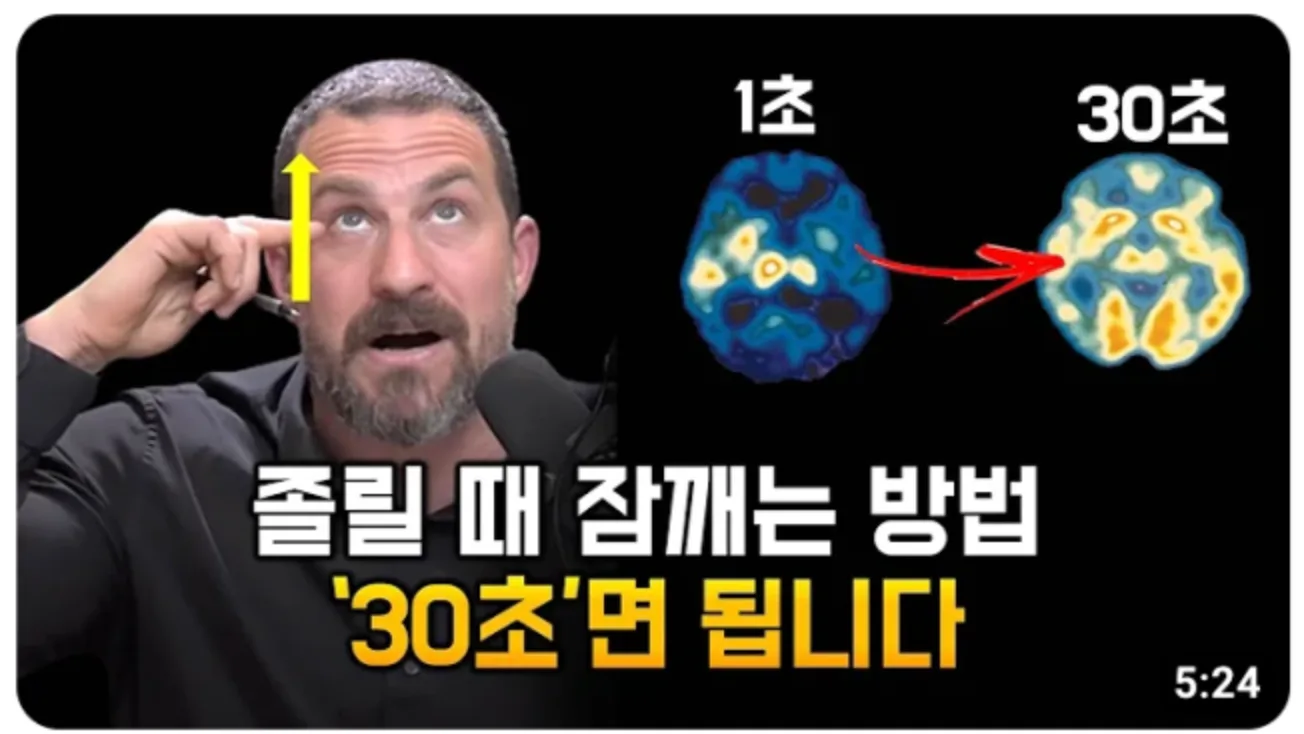
There's Andrew Huberman, currently sweeping the YouTube feed. The moment Huberman said on his podcast that you should look upward with your eyes to wake yourself up, Korean self-improvement channels went wild splicing it together. But if this really worked, Starbucks revenue would drop, online lecturers would be teaching dozing students how to wake up by looking up, that clip would end up on a Jung Seung-je fan channel, and the government would be running an eyes-up-for-a-moment campaign to prevent drowsy driving. When something really works, the field adopts it fast, no question. You'd expect at least a video of someone testifying that it worked, but there isn't one.
Advice nobody has to answer for
One feature of self-improvement is that you don't have to answer for your content. We have terms like pseudo-medicine and pseudo-science, but no term for pseudo-self-improvement. Because in medicine bad information wrecks people, and in self-improvement there's nothing like that. In self-improvement, whatever feels good is good. The methods being proposed might even help a little if you try them. But that's exactly why it's so easy to fall into the trap. You might be better off spending that time on something else. And it muddies what actually matters.
Self-improvement takes a long time to come under criticism. Even the once-hot Miracle Morning is only now starting to get some pushback. A huge amount of time and attention gets burned before it's proven to be less effective than advertised.
And a lot of self-improvement content is stitched together from clips of overseas gurus. Made that way, the meaning doesn't come through. You might understand the content itself, but it only turns into action once you've transplanted that person's mindset, and that's not something one or two videos can cover.
Christians go to church every week because they want to live the way the Bible says — so if you want to transplant a master's mindset, don't you think it takes more than a couple of videos? You'd need to read their books, follow the guru's Twitter, really get into it. Clips made by superficially pulling out the highlights are very unlikely to turn into action. It takes real devotion.
Beyond the question of whether self-improvement videos work, I think letting a feed drive your information intake is deeply toxic to a knowledge worker's competitiveness. You need the ability to hold your own goals and go find and dig up content yourself. It'll only get rarer from here. With self-improvement videos too, you should be seeking out the skill you need and watching for that — consuming content padded with marketing and abstractions to drive up likes and subscribes won't get you anywhere. I'll close with words from Nassim Taleb, who holds a similar view.
Don't read the newspaper. Don't follow the news in any form.
Read last year's newspaper instead. This isn't about ignoring the news.
It's that you should come to the news from the event, not the other way around.
Nassim Nicholas Taleb
Pieces with a similar feel
Footnotes
-
Speaking of cold showers — these days I do Contrast Bathing. ↩